


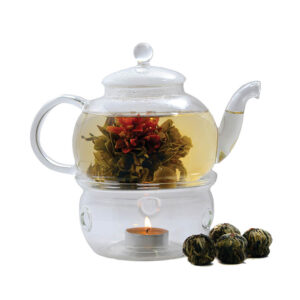

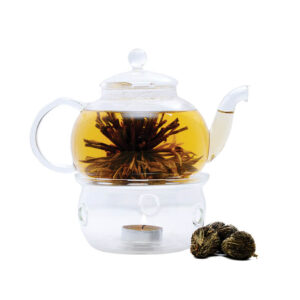
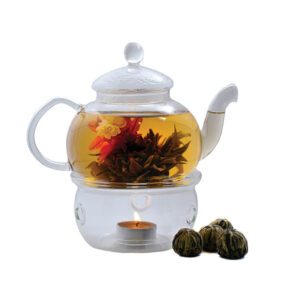

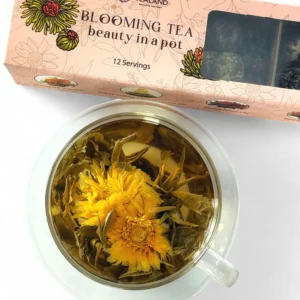

There’s a moment, about three minutes after you pour the water, when something quiet and remarkable happens. The tight little bundle at the bottom of your glass slowly uncurls, leaves spreading outward, and a flower — a real one — rises to the surface. It sounds like a trick. It isn’t.
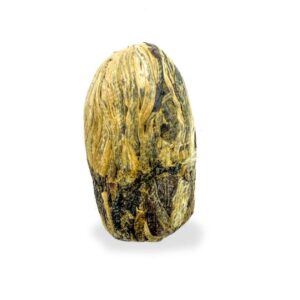
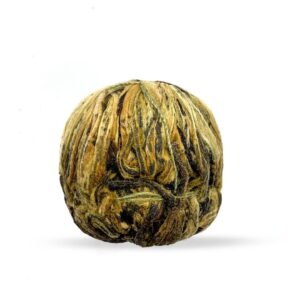
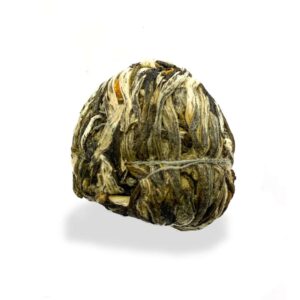
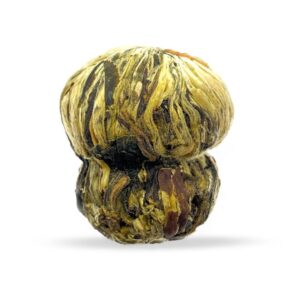
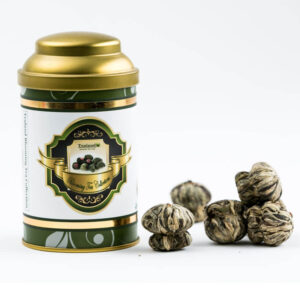
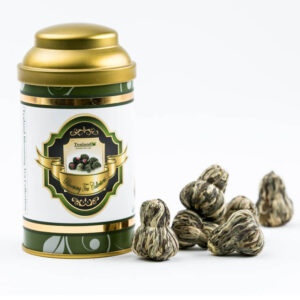
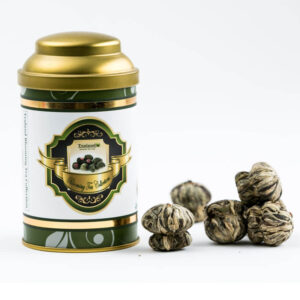
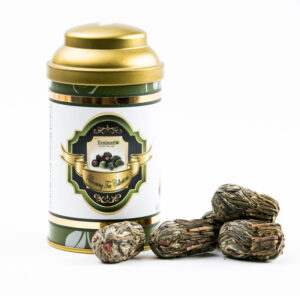
Blooming tea is exactly what it looks like: tea leaves, hand-sewn around dried flowers, shaped into a ball, and dried. Drop one into a glass teapot, add hot water, and wait. Each ball is made by hand, one artisan, needle and thread, up to ten minutes per piece — which is why no two unfurl in quite the same way.
These teas are made almost entirely in China’s Fujian, Sichuan, Hunan, and Yunnan provinces, using young leaves and shoots from Camellia sinensis harvested during the rainy season. The leaves are processed and shaped the same day they’re picked to keep them pliable enough to work with. Once the flower — chrysanthemum, jasmine, lily, osmanthus, hibiscus, and others — is placed at the centre, the bundle is hand-tied with silk or cotton thread, wrapped into shape, and slowly dried at low heat.
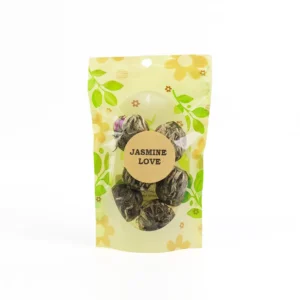
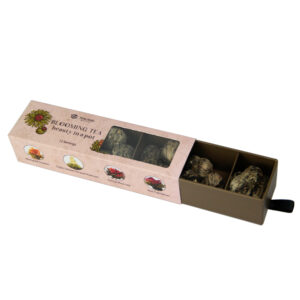
The result can be a ball, a pagoda, a heart, a lantern, or something stranger still. The manufacturer names each one according to what blooms inside: Triple Yellow Chrysanthemum, Osmanthus Lily, Red Carnation, Jasmine Love.
Whether the practice is centuries old (there are references in Song Dynasty texts to tea leaves being “linked together with colours for the entertainment of the emperor”) or a more recent art form is still debated. Either way, the craft is real.
Most blooming teas use green tea as their base — its leaves are soft enough to shape without crumbling, and its flavour is light enough to let the flowers come through. The result is usually gentle: slightly grassy, subtly sweet, with a floral note that depends on what’s inside. Jasmine Lily is delicate and fragrant. Osmanthus Lily has a soft apricot quality. Marigold Garden is a little earthier, with a warm golden colour in the cup.
None of these are big, bold teas. They’re teas you slow down for.
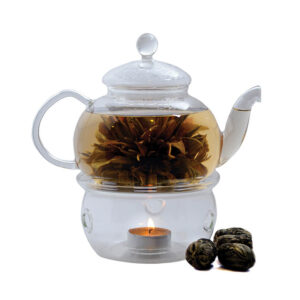
Use a glass teapot or a tall glass — anything transparent. That’s not just aesthetics; it’s how you know when it’s ready.
Water temperature: 80–90°C. Boiling water is too harsh for green tea leaves and will flatten the flavour. Let your kettle rest for a minute or two after boiling.
Place one ball in your vessel, pour the water slowly over it, and just watch. The bloom usually takes 3–4 minutes to open fully. Once it has, the tea is ready to drink.
Most balls can be steeped 2–4 times. For each re-steep, add a minute or two to the brewing time.
A box of blooming teas is one of those gifts that needs almost no explanation — you just hand someone a glass teapot and a bag of balls and let the tea do the talking. The Blooming Tea Gift Box is a good starting point if you’re not sure which variety someone prefers.
A. Yes, a modest amount — similar to other green teas. Less than coffee, more than most herbal teas.
A. You can, but you’ll miss most of the experience. A clear glass or teapot is really worth it here.
A. Yes. All the flowers used are food-grade edible varieties, dried and safe to consume.
We carry a small, carefully chosen selection of blooming teas — loose and in gift boxes — available for delivery across the UAE.