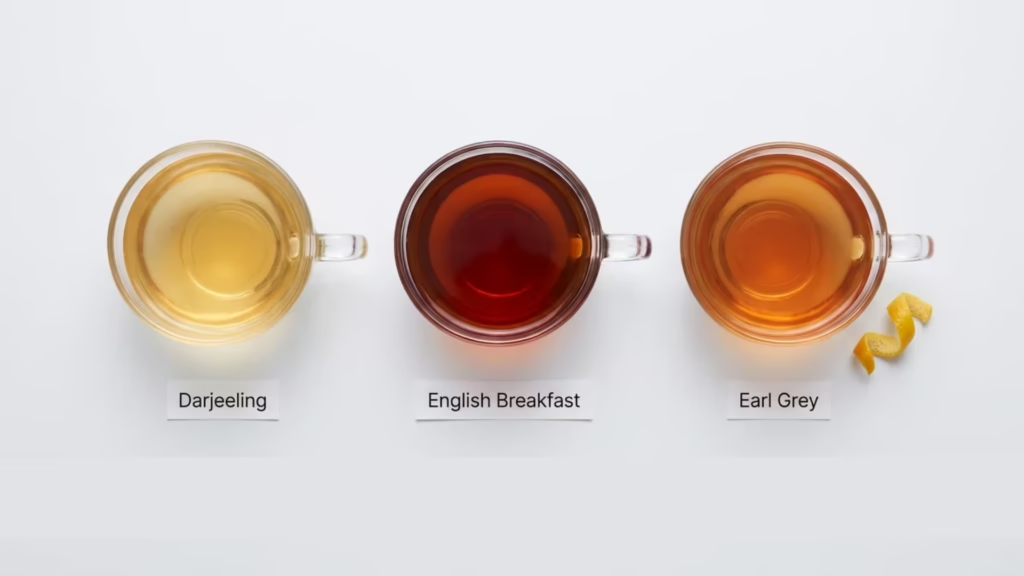
Darjeeling, English Breakfast, and Earl Grey are all black teas, but that’s where the similarity ends. Darjeeling is a single-origin tea grown in one part of India, English Breakfast is a full-bodied blend built for milk, and Earl Grey is a black tea flavoured with bergamot orange. Once you know what separates them, picking the right one for your mood (or your morning) gets a lot easier.
If you’ve ever stood in front of a tea shelf trying to decide between the three, you’re not alone. They’re often shelved side by side, they’re all brewed from the same Camellia sinensis plant, and they all show up at breakfast tables across the UK. But the leaf, the flavour, and the story behind each one couldn’t be more different
Key Takeaways
- Darjeeling is a single-origin black tea from India's Darjeeling region, known for a light, floral, almost wine-like character.
- English Breakfast is a blend, usually Assam, Ceylon, and sometimes Kenyan tea leaves, made to be strong, malty, and milk-friendly.
- Earl Grey is a flavoured black tea, traditionally a China or Ceylon base, scented with bergamot for a citrusy aroma.
- Darjeeling is the most delicate of the three. English Breakfast is the boldest. Earl Grey sits somewhere in between, depending on the base.
- All three pair well with milk, though purists tend to skip it with Darjeeling to let the flavour come through
What Is Darjeeling Tea?
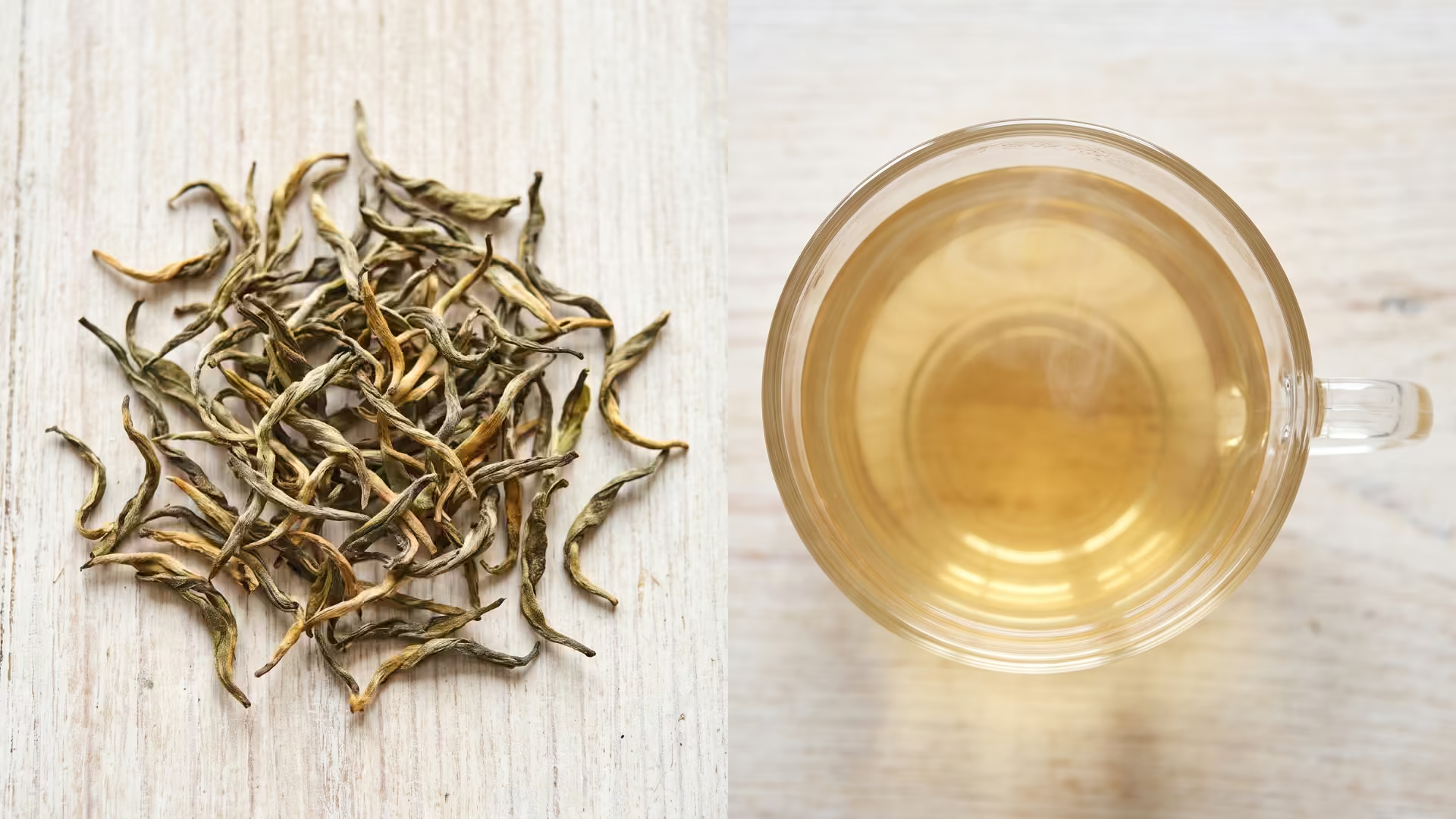
Darjeeling comes from a small, high-altitude region in West Bengal, India, tucked into the foothills of the Himalayas. Unlike English Breakfast or Earl Grey, it’s not a blend or a flavoured tea. It’s grown, harvested, and sold as its own single-origin variety, similar to how a wine region protects its name.
That’s part of why tea lovers call it the “Champagne of teas.” The comparison isn’t just marketing. Darjeeling tea leaves pick up a distinct muscatel note, something between grape and light spice, thanks to the altitude, the soil, and a small local insect called the tea mosquito bug that nibbles the leaves and triggers the flavour change.
The taste itself is light and floral, closer to an oolong than a typical robust black tea. Because of that delicacy, most people drink it without milk. If you want the full story on flush timing and how the seasons change the flavour, we’ve covered that in our complete guide to Darjeeling tea. To learn more about Darjeeling tea, read this blog.
That’s part of why tea lovers call it the “Champagne of teas.” The comparison isn’t just marketing. Darjeeling tea leaves pick up a distinct muscatel note, something between grape and light spice, thanks to the altitude, the soil, and a small local insect called the tea mosquito bug that nibbles the leaves and triggers the flavour change.
The taste itself is light and floral, closer to an oolong than a typical robust black tea. Because of that delicacy, most people drink it without milk. If you want the full story on flush timing and how the seasons change the flavour, we’ve covered that in our complete guide to Darjeeling tea. To learn more about Darjeeling tea, read this blog.
What Is English Breakfast Tea?
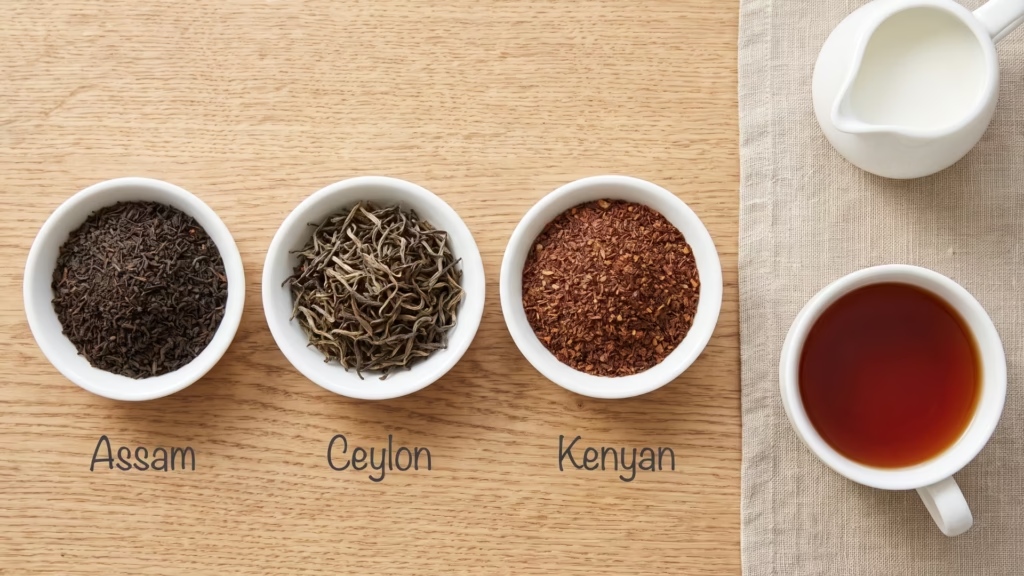
English Breakfast tea isn’t grown anywhere. It’s blended, usually from Assam, Ceylon, and sometimes Kenyan black tea leaves, each contributing something different to the cup. Assam brings the malty backbone. Ceylon adds brightness. Kenyan tea, when included, adds body and colour.
The result is a full-bodied, robust brew strong enough to stand up to milk and sugar without losing itself. That’s exactly the point. English Breakfast tea was built to pair with a hearty morning meal, and its popularity in the UK is often linked to Queen Victoria, who reportedly helped push the blend into mainstream British tea culture in the 1800s.
Despite the name, English Breakfast tea’s exact origins are a little murky. Some accounts trace an early version back to 19th century America before it made its way into British tea culture and picked up its now-famous name. Either way, it became the anchor of British and Irish breakfast tables, often referred to simply as “elevenses” material when sipped later in the day too.
The result is a full-bodied, robust brew strong enough to stand up to milk and sugar without losing itself. That’s exactly the point. English Breakfast tea was built to pair with a hearty morning meal, and its popularity in the UK is often linked to Queen Victoria, who reportedly helped push the blend into mainstream British tea culture in the 1800s.
Despite the name, English Breakfast tea’s exact origins are a little murky. Some accounts trace an early version back to 19th century America before it made its way into British tea culture and picked up its now-famous name. Either way, it became the anchor of British and Irish breakfast tables, often referred to simply as “elevenses” material when sipped later in the day too.
What Is Earl Grey Tea?
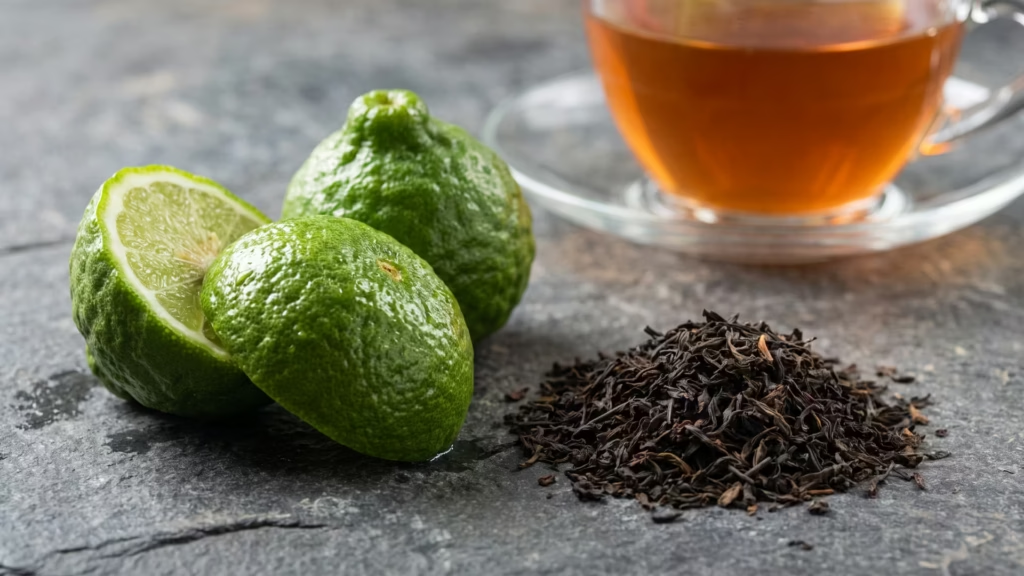
Earl Grey stands apart from the other two because it’s defined by flavour, not origin or blend ratio. It starts with a black tea base, traditionally Chinese keemun or Ceylon tea, and gets infused with oil from the bergamot orange, a citrus fruit grown mostly in southern Italy.
That bergamot oil is what gives Earl Grey its instantly recognisable aroma: floral, slightly bitter, and citrus-forward in a way no other black tea comes close to. It’s a scented tea rather than a single-origin one, and the quality of the cup usually comes down to how good the bergamot oil is and which base leaves it’s paired with.
The name traces back to Charles Grey, the 2nd Earl Grey and British Prime Minister in the 1830s, though the actual origin story is more legend than documented fact. One popular version claims a grateful Chinese diplomat gifted him the blend after his staff saved a relative’s life. Historians generally treat that story as folklore rather than history, but it’s stuck around anyway, which says something about how much people enjoy a good origin story with their tea.
Darjeeling vs English Breakfast vs Earl Grey: Key Differences
| Darjeeling | English Breakfast | Earl Grey | |
|---|---|---|---|
| Type | Single-origin black tea | Black tea blend | Flavoured black tea |
| Base leaves | Darjeeling, India | Assam, Ceylon, Kenyan | China or Ceylon (traditionally) |
| Flavour | Light, floral, muscatel | Full-bodied, malty, robust | Citrusy, floral, bergamot-forward |
| Best with milk? | Not usually | Yes | Optional |
| Best time to drink | Afternoon tea | Breakfast | Anytime |
How to Brew Each One
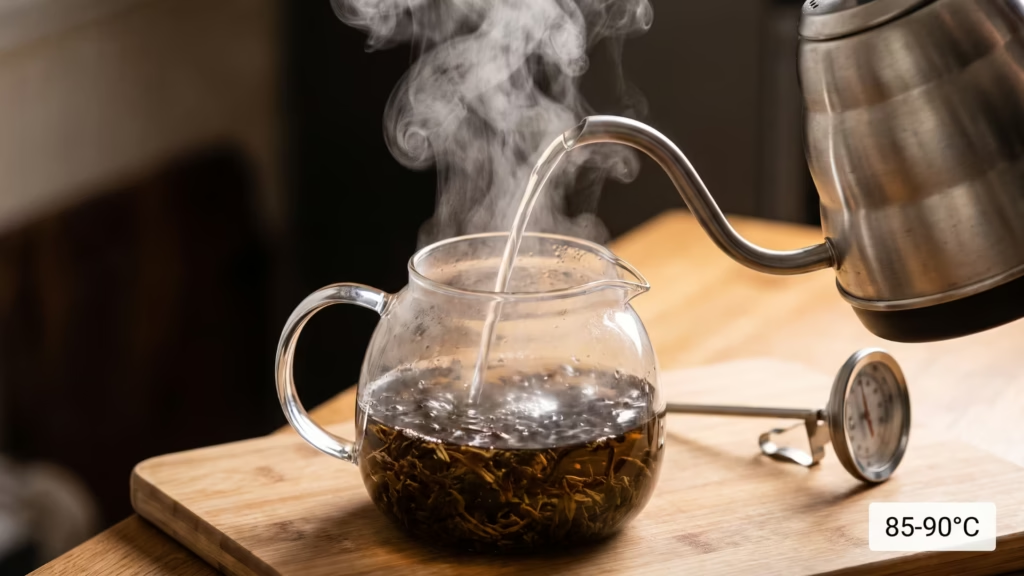
Darjeeling is the most temperature-sensitive of the three. Boiling water can scorch the delicate leaves and strip out the floral notes, so aim for water just off the boil, around 85-90°C, and steep for 3 minutes.
English Breakfast and Earl Grey can both handle a fuller boil since the base leaves are sturdier. A few pointers worth keeping in mind:
- Use freshly boiled water, around 95-100°C, for both.
- Steep English Breakfast for 3-5 minutes for a stronger, malty cup.
- Steep Earl Grey for 3-4 minutes so the bergamot doesn’t turn bitter.
- Loose leaf tends to give a fuller flavour than bagged tea for all three.
Wrapping Up
None of these three teas is objectively “better.” Darjeeling is for the days you want something delicate and a little indulgent. English Breakfast is for the mornings that need a proper wake-up call. Earl Grey sits nicely in between, whether that’s elevenses, an afternoon break, or just because you like citrus with your tea.If you’re still deciding, try all three. Explore Tealand’s range of black teas to find your everyday cup.
Frequently Asked Questions
Is Darjeeling tea stronger than Earl Grey tea?
Not usually. Darjeeling is lighter and more floral, while Earl Grey’s bergamot oil and black tea base give it a bolder, more assertive flavour.
Is Darjeeling tea the same as English Breakfast?
No. Darjeeling is a single-origin tea from one region in India. English Breakfast is a blend of teas from multiple origins, usually Assam, Ceylon, and Kenya.
What is better, Earl Grey or English Breakfast?
It depends on what you’re after. English Breakfast is stronger and pairs better with milk, while Earl Grey offers a lighter, citrus-scented cup. Neither is “better,” just different.
Which tea has more caffeine: Earl Grey or English Breakfast?
English Breakfast typically has slightly more caffeine since it’s built from robust Assam leaves, while Earl Grey’s caffeine content depends on its base tea (often a lighter China or Ceylon leaf).