Unlock 10% off – just for signing up!
How to Store Loose Leaf Tea to Keep It Fresh

How to Store Loose Leaf Tea to Keep It Fresh?

The best way to store loose leaf tea is in an airtight, opaque container, kept in a cool, dark spot away from moisture, heat, and strong odors. Get those four things right and most teas will hold their flavor for 6 to 12 months, sometimes longer. Get any one of them wrong, though, and even a good white tea can turn flat and papery within weeks. Tea is porous. It absorbs whatever’s around it, good or bad, so your storage habits directly decide how long that jar actually tastes like something.

Key Takeaways

Why Tea Storage Actually Matters

Why Tea Storage Actually Matters

Camellia sinensis, the plant behind black, green, white, and oolong tea, is loaded with delicate compounds. Catechins, essential oils, and volatile aromatics are what give tea its character. They’re also the first things to break down. Oxidation is the main culprit. Once tea leaves are exposed to air, oxygen slowly degrades those compounds, and the tea starts tasting duller, staler, less like itself. Light and heat speed this process up. Moisture makes it worse. None of this happens overnight. But it adds up fast if your tea’s sitting in a clear jar on a sunlit counter.
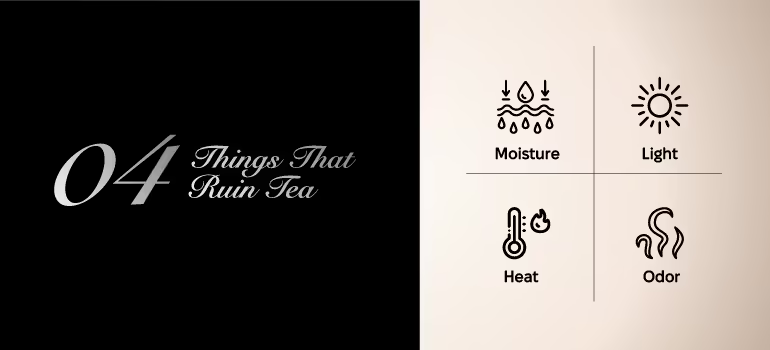
The Four Things That Ruin Tea

The Four Things That Ruin Tea

Every tea storage mistake pretty much traces back to one of these:
  • Moisture – Tea leaves are hygroscopic, meaning they pull moisture straight out of the air. Too much humidity and you’re looking at mold, not just faded flavor.
  • Light – Ultraviolet rays break down chlorophyll and essential oils. This is why premium tea rarely comes in a clear glass jar for long-term storage.
  • Heat – Warmth accelerates oxidation. A cabinet near the oven or a spot in direct sun will age your tea faster than you’d expect.
  • Odor – Tea leaves absorb smells from anything nearby: coffee, spices, cleaning products, even other teas.
There’s also condensation to watch for, which usually shows up when tea’s moved straight from the fridge to room temperature without time to adjust. More on that below.

If your tea smells like your spice cabinet, it's already telling you something went wrong.

Choosing the Right Container for Loose Leaf Tea

Choosing the Right Container for Loose Leaf Tea

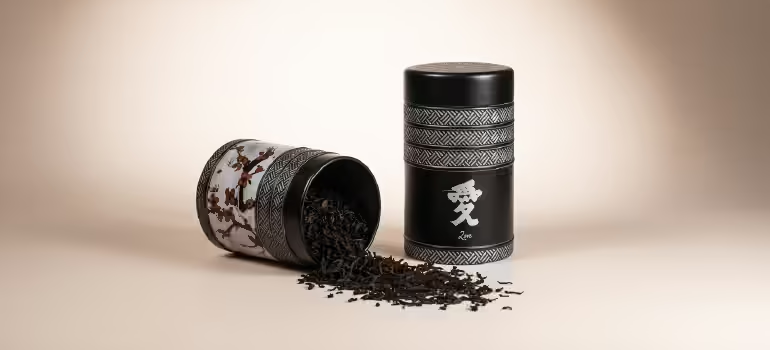
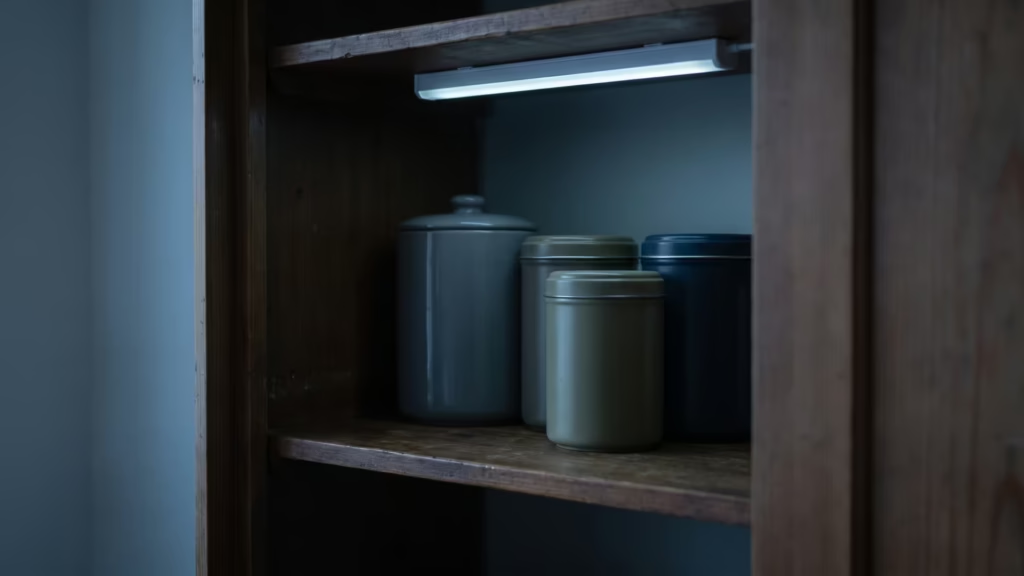
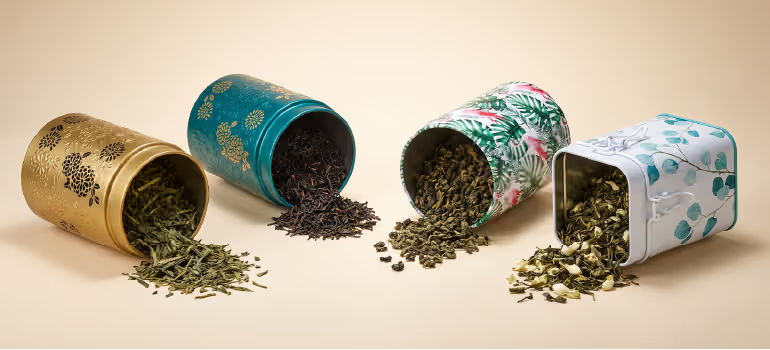
An airtight container is non-negotiable. Beyond that, material matters more than people realize. Tea tins and canisters are the gold standard. Look for ones with a rubber-sealed, hermetic lid rather than a loose-fitting one, that’s what separates a tin that actually protects your tea from one that’s just decorative.

Stainless steel containers work well too, especially for anyone storing tea long-term. They don’t let light through, they don’t hold onto smells, and they’re durable enough to survive daily use.

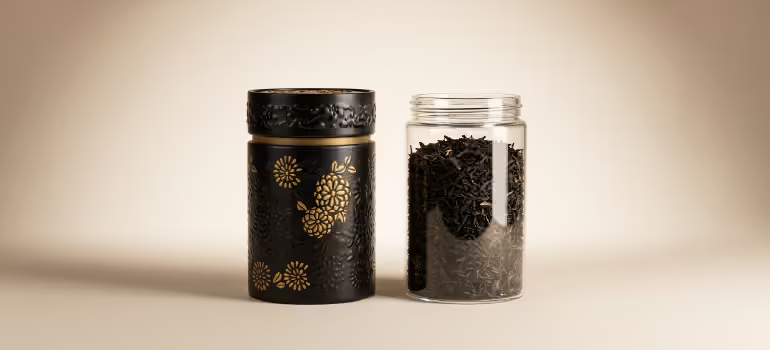
Glass jars are where people get tripped up. A clear glass jar looks great on a shelf, but it does nothing to block light. If you’re using mason jars or any clear glass container, keep them tucked inside a dark cabinet rather than out on display. Amber or opaque glass jars solve this problem on their own.

What to avoid: thin plastic containers. Plastic is often slightly porous, can leach odors into tea over time, and rarely forms a true airtight seal. If plastic’s all you’ve got, at least double-bag with a mylar liner as a stopgap.
Where to Store Your Tea at Home

Where to Store Your Tea at Home

This part trips people up more than the container does. Store tea in a cool, dry spot, ideally a dedicated tea drawer or a tea cabinet away from the stove, dishwasher, and any source of steam. A pantry shelf works fine as long as it’s not right next to your spice rack or coffee beans.

Should you refrigerate loose leaf tea? Generally, no. Opening the fridge repeatedly exposes tea to moisture and fluctuating temperatures, and it’ll absorb odors from everything else in there.

The one exception is delicate green teas like sencha, which some people store cold for extended freshness, but only in a fully sealed, moisture-proof bag, and it needs to reach room temperature before opening to avoid condensation forming inside the container. Freezing tea is a step further still, and honestly not worth the risk for most home storage. The moisture from thawing tends to do more harm than the cold does good.
Tea Storage Tips by Tea Type

Tea Storage Tips by Tea Type

Not every tea ages the same way, so a one-size-fits-all shelf life doesn’t quite hold up:
  1. Green tea and white tea are the most delicate. Their fresh, grassy character fades fastest, so aim to use them within 6 to 12 months for best flavor.
  2. Black tea is more oxidized to begin with, which makes it noticeably more forgiving. Stored well, it holds its character for over a year.
  3. Oolong sits in between, and depending on how heavily oxidized or roasted it is, it can hold up nearly as well as black tea.
  4. Pu-erh is the outlier here. It’s meant to age, and many drinkers actively seek out older pu-erh for its deeper, more complex flavor.
  5. Jasmine and other scented teas need extra odor protection since their signature scent fades the fastest of all, and cross-contamination with other smells is more noticeable too.
None of this means your tea “expires” the way food does. It’s not typically unsafe past a certain date, it just gradually loses the aroma and depth that make it worth drinking in the first place.

Wrapping Up

Good tea storage really comes down to four things: keep it airtight, keep it dark, keep it cool, and keep it away from anything with a strong smell. A decent tin or canister and a spot in your cabinet away from the stove will do more for your tea’s freshness than almost anything else you could buy.

Different teas will still age at different speeds, so it’s worth checking in on older stock every few months, especially delicate greens and whites. Get the basics right, though, and every cup should taste the way it’s supposed to.

Frequently Asked Questions

Should I store loose leaf tea in the fridge?
It’s not recommended for most teas. Fridges introduce moisture and odor exposure every time the door opens. If you do refrigerate delicate greens, keep them in a fully sealed, airtight bag and let them return to room temperature before opening.
Keep it in an airtight, opaque container, away from light, heat, and moisture. Buying in smaller quantities you’ll actually use within a few months also helps more than people expect.
Most teas stay at their best for 6 to 12 months. Black tea and pu-erh tend to last longer, while green and white teas fade faster.
An airtight tin, canister, or opaque jar with a proper hermetic seal. Stainless steel and ceramic both work well too.
Yes, as long as it’s kept out of direct light, ideally in a cabinet rather than on an open shelf. Amber or tinted glass helps if you want it on display.
It’s best not to. Tea absorbs surrounding aromas easily, so mixing types, especially scented teas like jasmine, can affect the flavor of everything nearby.
It doesn’t expire in the traditional sense. It gradually loses aroma and taste rather than becoming unsafe to drink.

Leave a Reply

Your email address will not be published. Required fields are marked *

GET 10% OFF ON SIGNUP!

Best Selling Range:

Related Articles