Unlock 10% off – just for signing up!
What Is Yellow Tea

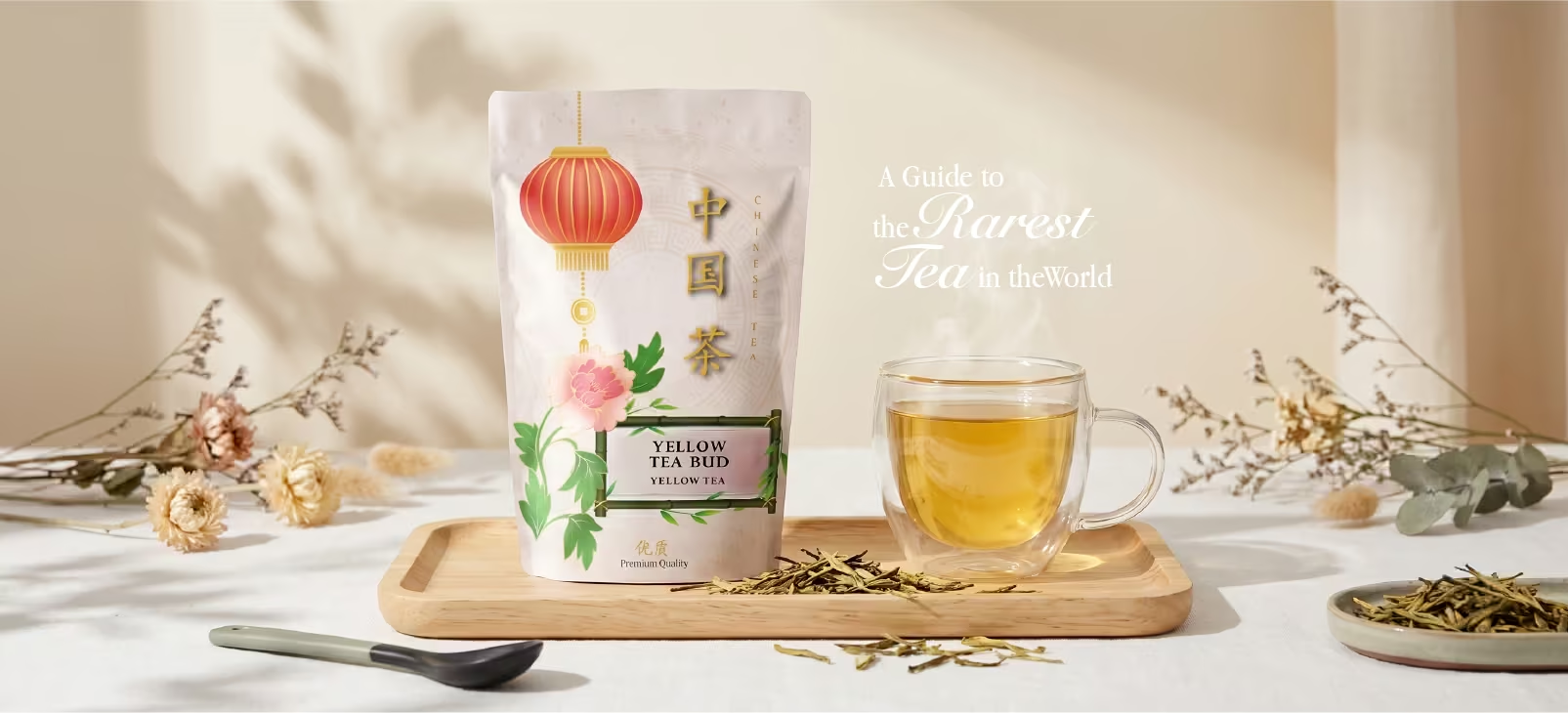
What Is Yellow Tea? A Guide to the Rarest Tea in the World

Yellow tea is one of the least-known tea types on the planet, and yet in Chinese tea culture, it carries centuries of prestige. Produced in tiny quantities, rarely exported, and painstakingly handcrafted by skilled tea masters, yellow tea sits in its own quiet category between green and white tea. If you’ve only just heard of it, you’re not alone.

Key Takeaways

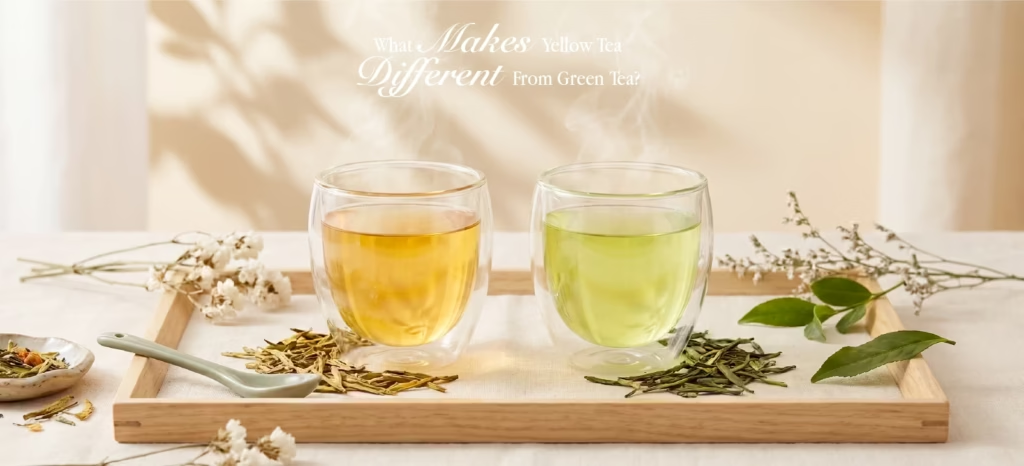
Yellow Tea Different From Green Tea

What Makes Yellow Tea Different From Green Tea?

At first glance, yellow tea looks a lot like green tea. Both are made from the Camellia sinensis plant. Both use tender buds and leaves harvested in early spring. Both go through a “kill green” step (shāqīng) where heat stops the enzymes from triggering full oxidation. The difference comes right after that.

Where green tea is dried quickly to lock in its fresh, grassy character, yellow tea goes through an additional step called men huang, or sealed yellowing. The tea leaves are loosely wrapped in paper or cloth and left to rest under low heat for hours, sometimes days. This slow process allows a small degree of oxidation to take place — just enough to mellow out the sharpness without fully oxidizing the leaf.

The result is something noticeably softer. Less grassy smell, less bite, more of a warm sweetness with lingering umami. Yellow tea is like green tea, but with an added layer of depth and smoothness that makes it distinctly its own thing.
What Is Yellow Tea

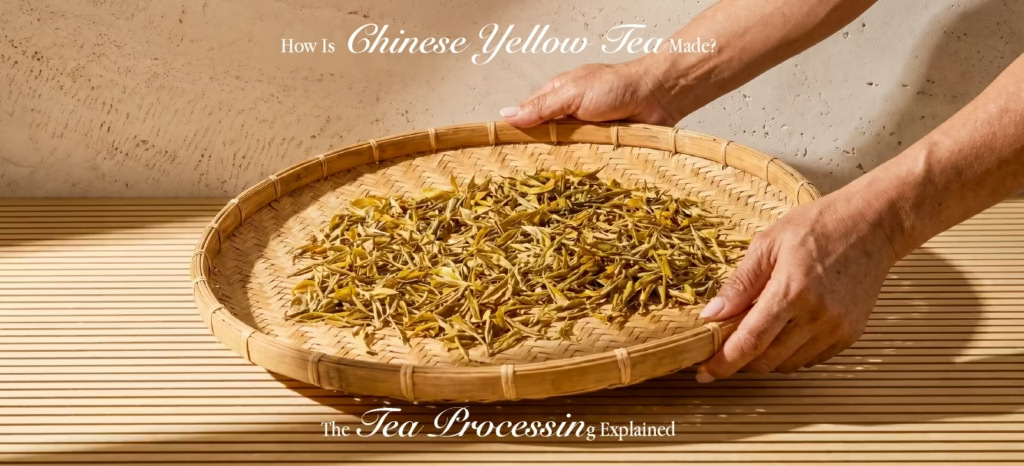
How Is Chinese Yellow Tea Made? The Tea Processing Explained

The yellow tea-making process is delicate and largely done by hand. It involves several stages, each requiring careful timing:
What makes this process rare is how much it depends on the judgment and experience of skilled tea masters. Timing the men huang step is not an exact science. Get it wrong and you lose the character of the tea entirely.
3 Main Types of Yellow Tea

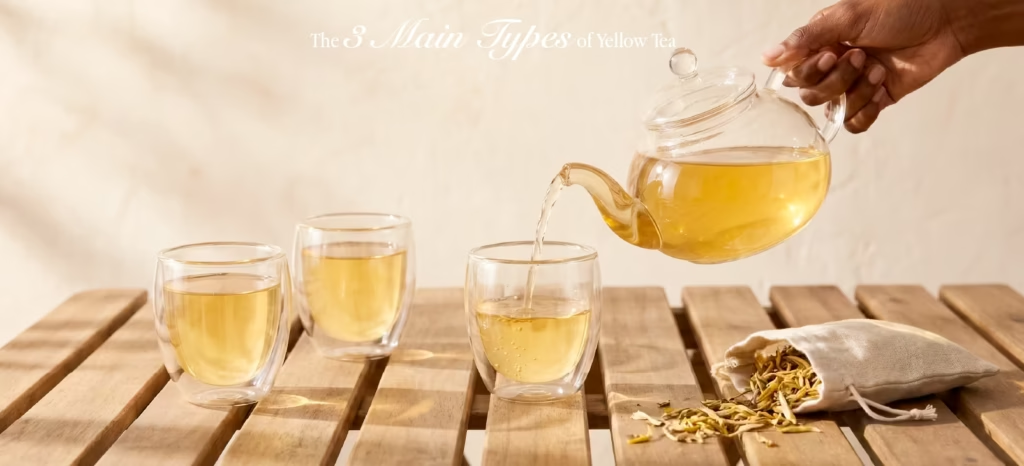
The 3 Main Types of Yellow Tea

Yellow tea is not a single product. There are several distinct varieties, each tied to a specific region in China, and each with its own character.

Jun Shan Yin Zhen

Jun Shan Yin Zhen (“Silver Needle from Junshan”) is grown on Jun Shan Island in Hunan Province, a small island in Dongting Lake. Made entirely from single buds, its production closely resembles that of white tea’s Baihao Yinzhen. The flavor is gentle and sweet, the infusion a pale gold. It was a tribute tea during the Tang dynasty, reserved for the emperor, and it remains one of China’s most famous teas today.

Meng Ding Huang Ya

Grown on the misty slopes of Meng Ding Mountain in Sichuan Province, Meng Ding Huang Ya (“Yellow Buds of Meng Ding”) has a history tracing back to the Han dynasty. Made from one bud and one leaf, it carries a slightly fuller body than Jun Shan Yin Zhen while keeping that characteristic mellow flavor yellow tea is known for.

Huo Shan Huang Ya

Huo Shan Huang Ya comes from Anhui Province, specifically the Huo Shan area. Compared to the other two, it has a slightly nuttier, toastier quality. Anhui Province is also home to some of China’s other great teas, and the tea cultivation traditions there run deep.

Benefits of Yellow Tea

Yellow tea shares much of its nutritional profile with green tea, given how similar their production methods are. The research on yellow tea specifically is limited compared to green tea, but what’s known is promising:

Antioxidants — Like green tea, yellow tea contains polyphenols and catechins that may help protect cells from oxidative stress.

Digestive support — Some studies suggest that regular tea consumption, including lighter oxidized teas, may support healthy digestion.

Gentler on the stomach — The men huang process appears to reduce some of the compounds that make green tea harsh or astringent. Tea lovers with sensitive stomachs often find yellow tea easier to drink.

Caffeine content — Yellow tea contains caffeine, though generally less than black tea or oolong tea.

Yellow tea is often recommended as a starting point for people who want the health benefits of green tea but find its grassy, sharp taste too intense. .

Why Is Yellow Tea So Rare Outside of China?

The production of yellow tea is slow, small-scale, and heavily dependent on experienced hands. The men huang step alone can take anywhere from several hours to multiple days, and the entire process requires close attention that most modern, high-volume tea operations simply can’t offer.

Most yellow tea is produced in limited harvests, from specific regions, by producers who’ve been refining their methods for generations. That’s a very small supply to begin with.
Add to that the fact that yellow tea is not well understood in export markets. Loose leaf tea enthusiasts outside of China tend to gravitate toward green tea, white tea, or oolong.

Yellow tea, as a category, gets lost in the middle. It’s neither as accessible as a Japanese green tea nor as dramatic as a Taiwanese high mountain oolong, so it rarely makes it onto shelves in the West.
The result is that this traditional Chinese tea remains almost entirely a domestic treasure, which honestly makes finding a genuine cup of it feel like a small discovery.
Frequently Asked Questions

What exactly is yellow tea?
Yellow tea is a lightly oxidized Chinese tea made from the Camellia sinensis plant. It goes through a unique step called men huang (sealed yellowing) that gives it a mellow, smooth flavor and a yellow-tinted leaf with a golden infusion.
It tastes softer and less grassy than green tea, with a mild sweetness, subtle umami, and almost no bitterness when brewed correctly. The aroma of the tea is delicate, often described as clean and lightly floral or vegetal.
The yellow tea-making process is slow, labor-intensive, and requires experienced tea masters. Combined with limited regional production and low export volumes, yellow tea barely reaches markets outside of China.
Yellow tea contains antioxidants and polyphenols similar to green tea. It may support digestion, offer a gentler caffeine lift, and is generally easier on the stomach than green tea due to the men huang process reducing some astringent compounds.
Use water around 75-80°C (not boiling) and steep for 2 to 3 minutes. Boiling water can scorch the tender buds and flatten the flavor. For loose leaf tea, around 2-3 grams per 200ml of water is a good starting point.
No. Oolong tea undergoes partial oxidation ranging from 15% to 85%, giving it a wide flavor range from floral to roasted. Yellow tea is only very lightly oxidized through the specific men huang step. The two are distinct in both production method and taste.

Leave a Reply

Your email address will not be published. Required fields are marked *

GET 10% OFF ON SIGNUP!

Best Selling Range:

Related Articles